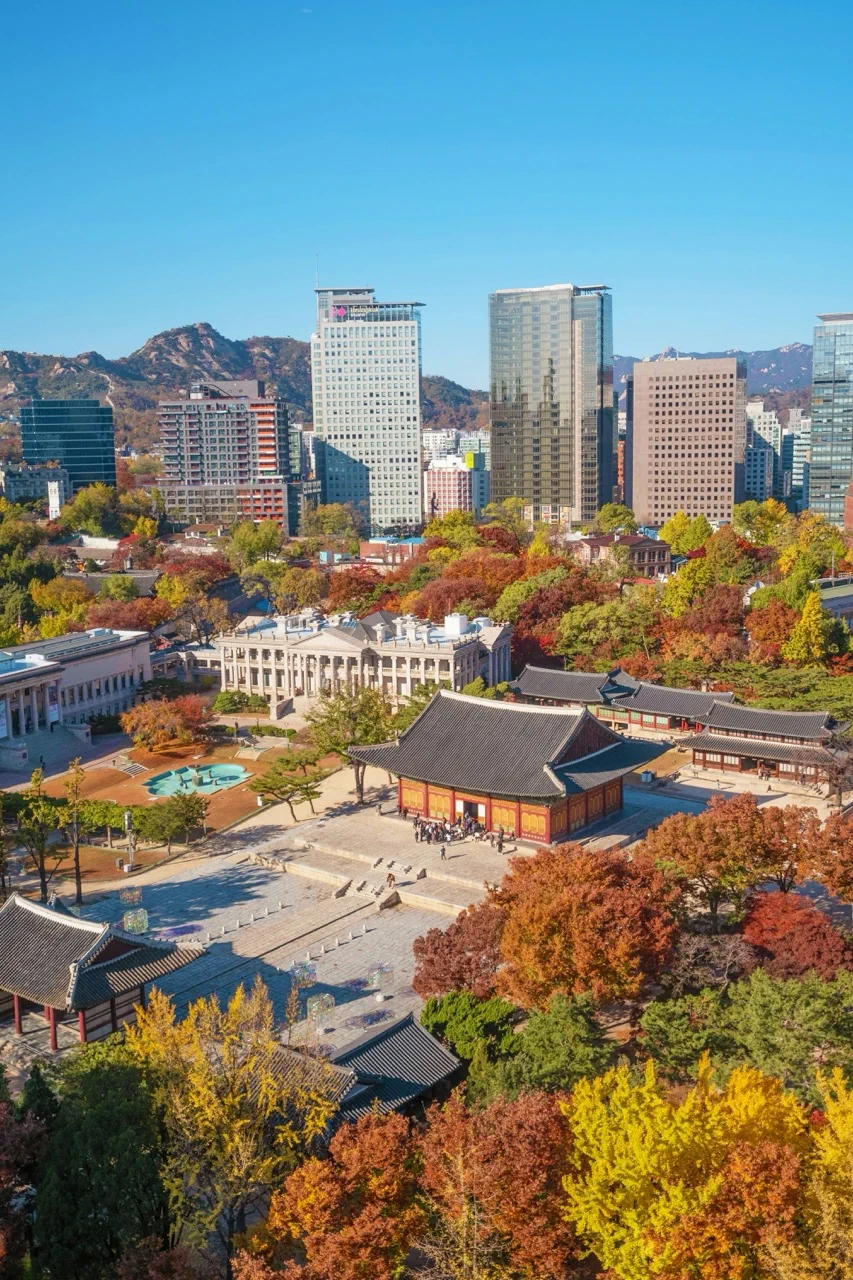
Deoksugung and Jeong-dong Audio Guide: The Korean Empire in Seoul

Deoksugung and Jeong-dong Audio Guide: The Korean Empire in Seoul

Deoksugung Palace & Jeong-dong · Permanent Collection

Walk through Deoksugung and Jeong-dong, where the final years of the Joseon dynasty and the rise of the Korean Empire reshaped Seoul’s royal and diplomatic landscape. This audio guide follows Daehanmun Gate, Junghwajeon Hall, Hamnyeongjeon, Jeonggwanheon, Seokjojeon, Dondeokjeon, and the palace stonewall path to show how imperial ceremony, royal life, Western-style architecture, and urban memory meet in one compact district. Beyond the palace walls, the guide continues into Jeong-dong’s modern heritage: former legations, missionary schools, churches, cultural venues, Seoul Museum of Art, the former Russian Legation site, Hwangudan Altar, and other places tied to diplomacy, education, religion, and reform. For English-speaking visitors, it works as a walking audio guide to Korea’s early modern crossroads, centered on the Korean Empire and the international city forming around it.

작품별 오디오 가이드 · 40작품 139트랙

Entering the Korean Empire: Daehanmun and the Palace Threshold

Start outside Daehanmun, where the guide can frame Deoksugung as the Korean Empire palace before crossing into the gate sequence. Use the guard ceremony, Daehanmun, Hamabi, and Geumcheongyo as a threshold from modern Seoul into imperial palace space.

Guide Introduction / Deoksugung & Jeong-dong Modernity
1

Guide Introduction / Deoksugung & Jeong-dong Modernity

1897, proclamation of the Korean Empire

Daehanmun Gate
2

Daehanmun Gate

1906, renamed Daehanmun

Palace Royal Guard Changing Ceremony
3

Palace Royal Guard Changing Ceremony

1996, reenactment began

Hamabi Stone and Geumcheongyo Bridge
4

Hamabi Stone and Geumcheongyo Bridge

1986, Geumcheongyo excavated and restored

Imperial Court Axis: Junghwamun to Junghwajeon

Move from the inner gate into the formal court of Junghwajeon. Slow the route in the courtyard, using rank stones, the central approach, and dragon-imperial symbols to explain how Gyeongungung became a palace of imperial ceremony after 1897.

Junghwamun Gate
5

Junghwamun Gate

1906, major-building restoration period

Junghwajeon Hall
6

Junghwajeon Hall

Rebuilt in 1906

Junghwajeon Courtyard and Rank Stones
7

Junghwajeon Courtyard and Rank Stones

Rebuilt in 1906

Junghwajeon Dragon Ramp and Imperial Symbols
8

Junghwajeon Dragon Ramp and Imperial Symbols

Rebuilt in 1906

Inner Palace Memory: Old Joseon Halls and Gojong's Residence

Turn from the formal court into the quieter inner halls: Seogeodang, Jeukjodang, Junmyeongdang, Hamnyeongjeon, Gwangmyeongmun, Deokhongjeon, and Jeonggwanheon. This section connects Joseon origins, the 1904 fire and rebuilding, Gojong's residence, diplomatic reception rooms, and the hybrid East-West taste of the Korean Empire.

Seogeodang Hall
9

Seogeodang Hall

1593 context; exact construction date unknown

Jeukjodang Hall
10

Jeukjodang Hall

1608

Junmyeongdang Hall
11

Junmyeongdang Hall

Destroyed by fire in 1904; rebuilt in 1905

Hamnyeongjeon Hall
12

Hamnyeongjeon Hall

First built in 1897; rebuilt after the 1904 fire

13

Hamnyeongjeon Rear Garden and Chimneys

Rear garden context of Hamnyeongjeon after the 1904 fire

Gwangmyeongmun Gate
14

Gwangmyeongmun Gate

Korean Empire-era gate to Hamnyeongjeon Hall

Deokhongjeon Hall
15

Deokhongjeon Hall

Built in 1911

Jeonggwanheon Pavilion
16

Jeonggwanheon Pavilion

1900

Western Palace and Modern Institutions

Shift west toward Seokjojeon, the Western garden, Dondeokjeon, and museum spaces. Read this area as a laboratory of imperial modernization: Western-style architecture, diplomatic reception, later museum reuse, restoration, and the palace as an urban night landmark.

Seokjojeon Hall
17

Seokjojeon Hall

1910

Seokjojeon Interior / Daehan Empire History Museum
18

Seokjojeon Interior / Daehan Empire History Museum

1910

19

Seokjojeon West Wing / MMCA Deoksugung

1938

Dondeokjeon Hall
20

Dondeokjeon Hall

1902

Dondeokjeon Restoration and Diplomatic Space
21

Dondeokjeon Restoration and Diplomatic Space

Restoration completed in 2023

Western Garden and Fountain
22

Western Garden and Fountain

circa 1910

Deoksugung at Night and the Urban Palace
23

Deoksugung at Night and the Urban Palace

Renamed Deoksugung in 1907

Along the Stonewall: From Palace Edge to Jeong-dong Culture Street

Leave the palace interior and follow the Deoksugung Stonewall Walkway toward Jeong-dong. Use the restored British Embassy section as the spatial hinge, then continue past SeMA, Pai Chai, Jeongdong Theater, Chungdong First Methodist Church, and Jeongdong 1928 to see the palace edge become a modern education, religion, law, art, and performance corridor.

Deoksugung Stonewall Walkway
24

Deoksugung Stonewall Walkway

Completed connection in 2018

British Embassy Section and the Restored Stonewall Path
25

British Embassy Section and the Restored Stonewall Path

Opened August 30, 2017

26

Seoul Museum of Art / Former Supreme Court Building

Built in 1928 as Gyeongseong Court

Pai Chai Hakdang East Building
27

Pai Chai Hakdang East Building

Completed in 1916

Jeongdong Theater
28

Jeongdong Theater

Opened in 1995

Chungdong First Methodist Church
29

Chungdong First Methodist Church

1898

Salvation Army Central Hall / Jeongdong 1928 Art Center
30

Salvation Army Central Hall / Jeongdong 1928 Art Center

Built in 1928 as the Salvation Army Officer Training College

Jeong-dong Diplomacy and the Road of Gojong

Continue deeper into Jeong-dong's diplomatic landscape: Ewha and Sontag context, Jungmyeongjeon, former Seonwonjeon, the Path of King Gojong, the former Russian Legation, and the U.S. Legation context. Follow the move from palace annexes and missionary education toward the diplomatic route of the 1896 royal refuge and the 1905 crisis.

31

Ewha Hakdang / Simpson Memorial Hall and Sontag Hotel Context

1915

32

Jungmyeongjeon Hall

1897

33

Former Seonwonjeon Site

1901

34

The Path of King Gojong

1896

35

Former Russian Legation Site

1890

Former U.S. Legation / Habib House Context
36

Former U.S. Legation / Habib House Context

1884, Foote's Jeong-dong hanok purchase and U.S. Legation context; KHS lists 1883

Returning to the Civic Edge: Cathedral, Imperial Altar, and City Hall

Close by moving back toward Sejong-daero and Sogong-dong. Seoul Anglican Cathedral and Yangijae show how palace land, religion, and education overlapped; Hwangudan expands the Korean Empire story beyond the palace wall; Seoul Metropolitan Library turns the final stop into a civic-memory endpoint.

Seoul Anglican Cathedral
37

Seoul Anglican Cathedral

Construction began in 1922 and was completed in 1926

Yangijae Hall of Gyeongungung Palace
38

Yangijae Hall of Gyeongungung Palace

1904-1906, during the reconstruction of Gyeongungung Palace

Hwangudan Altar and Hwanggungu Shrine
39

Hwangudan Altar and Hwanggungu Shrine

Hwangudan was established in 1897; Hwanggungu Shrine was completed in 1899

Seoul Metropolitan Library / Former Seoul City Hall
40

Seoul Metropolitan Library / Former Seoul City Hall

Former Seoul City Hall was built in 1926 and reopened as Seoul Metropolitan Library in 2012