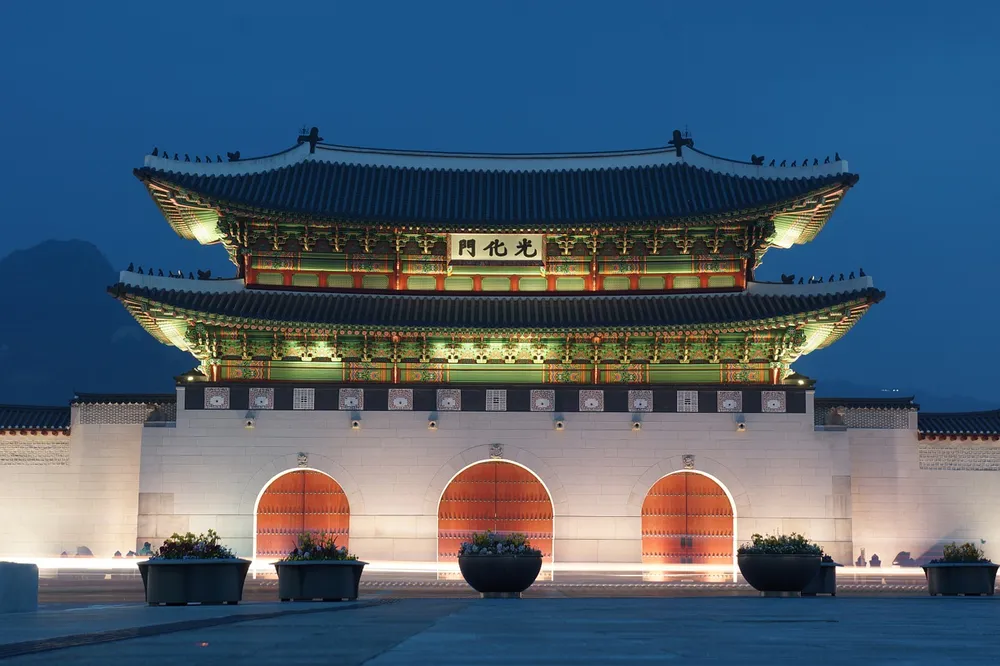
Gwanghwamun Square and Gyeongbokgung Palace Audio Guide
What you'll hear
Gwanghwamun Square and Gyeongbokgung Palace are connected, but statues, gates, bridges, and palace halls can feel like separate stops. This guide helps you move from the civic square into the palace with a clearer sense of sequence.
This audio guide links the statues of Admiral Yi Sun-sin and King Sejong with Gwanghwamun Gate, Heungnyemun Gate, Yeongjegyo Bridge, Geunjeongjeon Hall, and nearby royal spaces. It explains political symbolism, palace ceremony, and visual details such as the throne, rank stones, and Sun-Moon-Five-Peaks screen.
The guide is available on the web, so you can begin listening right away and choose chapters by location. Stop, replay, or skip ahead as you move between the square, gates, bridge, and palace halls.
Recommended for
- First-time visitors who want one route from Gwanghwamun Square into Gyeongbokgung Palace
- People who want to connect public statues with palace ceremonial spaces
- Visitors who need place-based explanations while walking between gates and halls
- Travelers who want to review names and spatial relationships after the visit
Included items
- Web audio guide
- Viewing points for Gwanghwamun Square, palace gates, bridges, and halls
- Joseon civic symbolism, royal ceremony, and architectural background explained
- Selectable chapters for square-to-palace walking routes
Before you buy
This product is a web-based audio guide. Admission tickets and an in-person guide are not included.
31 artworks · 110 tracks · 1 hr 21 min total audio
Offline download supported
Gwanghwamun Square and Gyeongbokgung Palace Audio Guide
What you'll hear
Gwanghwamun Square and Gyeongbokgung Palace are connected, but statues, gates, bridges, and palace halls can feel like separate stops. This guide helps you move from the civic square into the palace with a clearer sense of sequence.
This audio guide links the statues of Admiral Yi Sun-sin and King Sejong with Gwanghwamun Gate, Heungnyemun Gate, Yeongjegyo Bridge, Geunjeongjeon Hall, and nearby royal spaces. It explains political symbolism, palace ceremony, and visual details such as the throne, rank stones, and Sun-Moon-Five-Peaks screen.
The guide is available on the web, so you can begin listening right away and choose chapters by location. Stop, replay, or skip ahead as you move between the square, gates, bridge, and palace halls.
Recommended for
- First-time visitors who want one route from Gwanghwamun Square into Gyeongbokgung Palace
- People who want to connect public statues with palace ceremonial spaces
- Visitors who need place-based explanations while walking between gates and halls
- Travelers who want to review names and spatial relationships after the visit
Included items
- Web audio guide
- Viewing points for Gwanghwamun Square, palace gates, bridges, and halls
- Joseon civic symbolism, royal ceremony, and architectural background explained
- Selectable chapters for square-to-palace walking routes
Before you buy
This product is a web-based audio guide. Admission tickets and an in-person guide are not included.