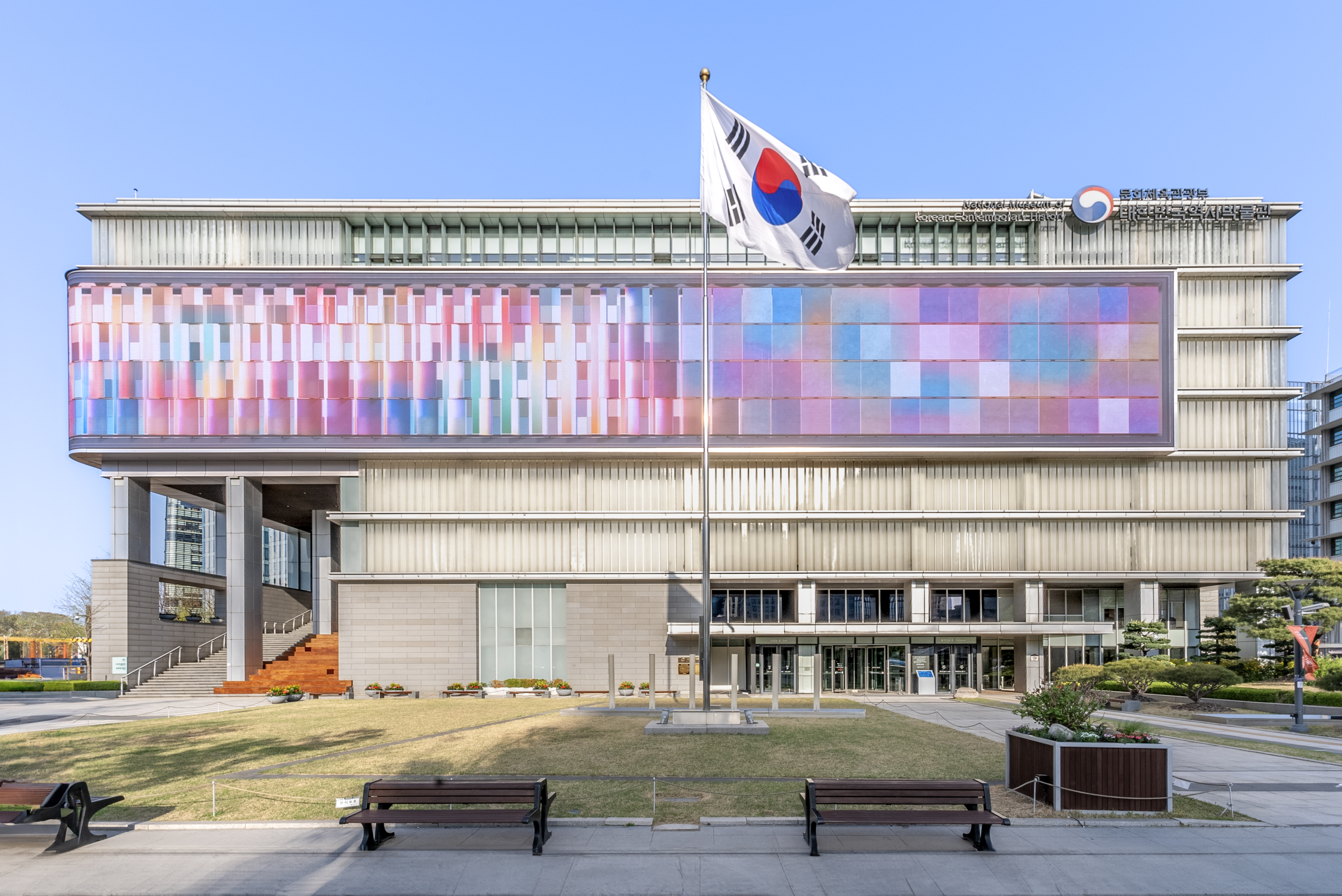
Korea Since 1894: National Museum of Korean Contemporary History Audio Guide
What you'll hear
The National Museum of Korean Contemporary History presents many documents, objects, and media from a dense historical period. This guide helps you follow how each item fits into Korea’s modern timeline from 1894 onward.
This audio guide focuses on materials such as Jeon Bong-jun records, the Ericsson Telephone, Korean Provisional Government documents, censored newspapers, Dongyangmok wrapping paper, and independence-related objects. It explains how public communication, statehood, resistance, and everyday culture connect inside the exhibition.
Listen on the web immediately and choose chapters according to your exhibit path rather than a fixed order. Revisit the same chapters after the visit to keep the timeline and object relationships clear.
Recommended for
- Visitors who want practical context for Korea’s modern history without reading every panel
- People comparing documents, objects, and symbols in one museum route
- Students who need a guided thread across political, media, and independence materials
- Guests who want to select chapters depending on available time
Included items
- Web audio guide
- Viewing points for documents, media objects, and independence-era materials
- Modern Korean history, political context, and artifact background explained
- Selectable chapters for timeline-based exhibition viewing
Before you buy
This product is a web-based audio guide. Admission tickets and an in-person guide are not included.
36 artworks · 119 tracks · 1 hr 27 min total audio
Offline download supported
Korea Since 1894: National Museum of Korean Contemporary History Audio Guide
What you'll hear
The National Museum of Korean Contemporary History presents many documents, objects, and media from a dense historical period. This guide helps you follow how each item fits into Korea’s modern timeline from 1894 onward.
This audio guide focuses on materials such as Jeon Bong-jun records, the Ericsson Telephone, Korean Provisional Government documents, censored newspapers, Dongyangmok wrapping paper, and independence-related objects. It explains how public communication, statehood, resistance, and everyday culture connect inside the exhibition.
Listen on the web immediately and choose chapters according to your exhibit path rather than a fixed order. Revisit the same chapters after the visit to keep the timeline and object relationships clear.
Recommended for
- Visitors who want practical context for Korea’s modern history without reading every panel
- People comparing documents, objects, and symbols in one museum route
- Students who need a guided thread across political, media, and independence materials
- Guests who want to select chapters depending on available time
Included items
- Web audio guide
- Viewing points for documents, media objects, and independence-era materials
- Modern Korean history, political context, and artifact background explained
- Selectable chapters for timeline-based exhibition viewing
Before you buy
This product is a web-based audio guide. Admission tickets and an in-person guide are not included.