Architectural Restoration
What is Architectural Restoration?
Architectural restoration is the careful, planned intervention in a historic building or site to keep it standing, repair damage, or reconstruct missing parts. Unlike general maintenance, its primary goal is to respect and reveal the cultural and historical meaning of a structure. The practice as we know it today began to take shape in nineteenth-century Europe, driven by a growing desire to protect monuments amidst rapid industrial and urban changes.
In the broader field of architectural conservation, restoration has a very specific meaning. While preservation simply aims to stop further decay and keep a building exactly as it currently is, restoration often seeks to return a structure to a known earlier state. This process requires a delicate balance. Today, professionals must decide not only how to fix a building, but which version of its long, layered history should be protected and shown to the public.
The Battle Between Ideal Forms and Honest Ruins
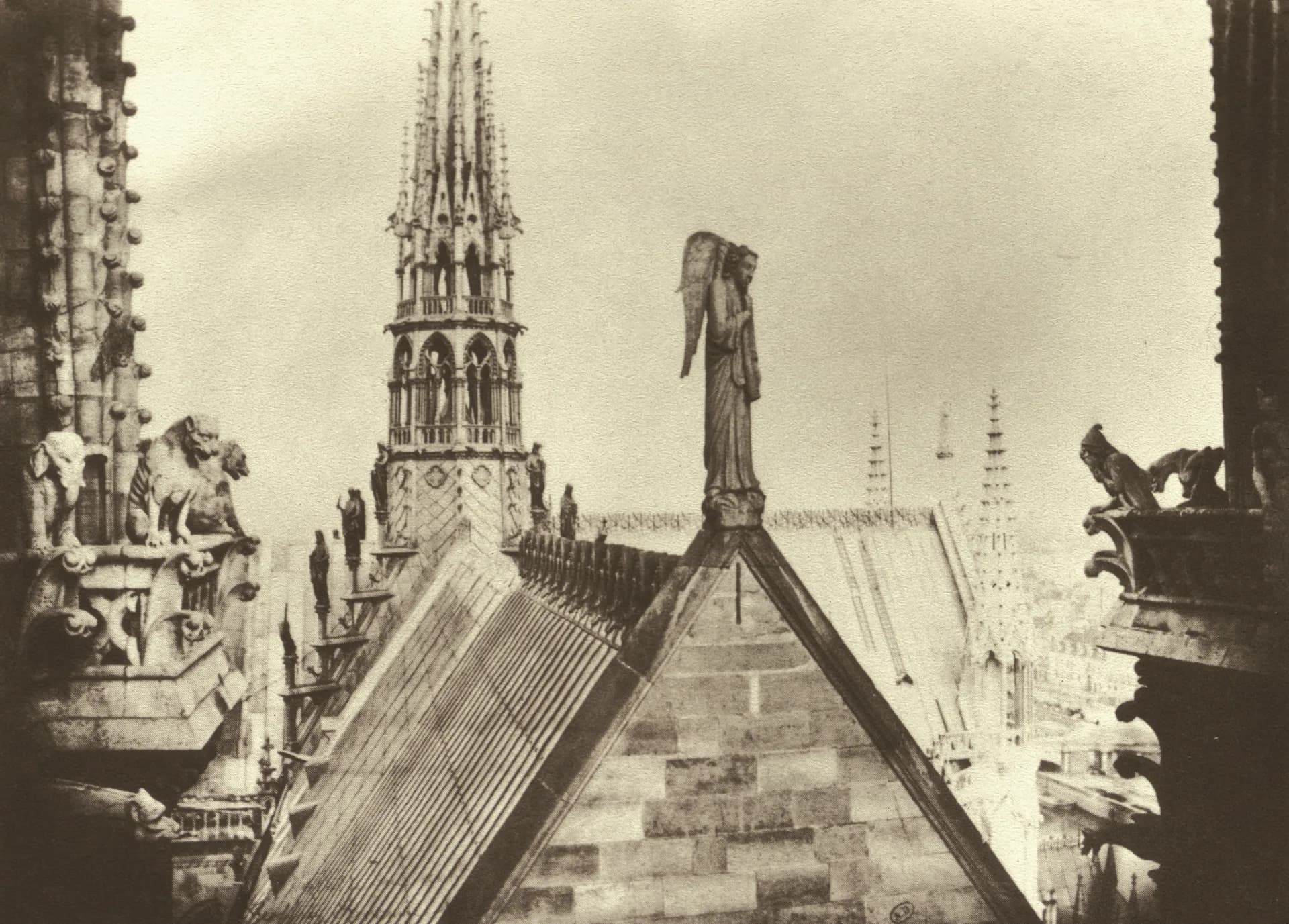
The foundations of modern restoration were built on an intense nineteenth-century debate between two opposing philosophies. In France, the architect Eugène-Emmanuel Viollet-le-Duc led major state-sponsored projects to restore medieval cathedrals. He believed in returning a building to a complete state that might never have actually existed at any single moment in the past. At sites like Notre-Dame de Paris, he boldly reconstructed missing elements based on historical inference to achieve an idealized architectural vision.
Across the English Channel, the British critic John Ruskin fiercely opposed this approach. Ruskin argued that rebuilding or altering historical structures falsified history. Instead, he valued a building's patina—the visible signs of age, weathering, and wear. Ruskin believed that these physical scars were central to a monument's authenticity and argued for the acceptance of honest ruins rather than deceptive reconstructions. This clash between aesthetic completeness and material truth set the stage for modern conservation ethics.
The Venice Charter and the Rule of Authenticity
To resolve these conflicting approaches and prevent heavy-handed interventions, heritage professionals began drafting international guidelines. The 1931 Athens Charter laid the early groundwork by promoting authenticity and the use of original fragments. This was followed by the highly influential 1964 Venice Charter, which expanded the concept of historic monuments and became the universal code for heritage conservation. The Venice Charter strictly requires that restoration must stop where conjecture—or guesswork—begins.
Under these rules, any new work added to a historic building must be clearly distinguishable from the original material to avoid deceiving observers. The charter also generally rules out full reconstructions of archaeological sites. Instead, it permits a technique called anastylosis. Anastylosis is the careful reassembling of original, dismembered parts of a monument, using minimal and recognizable new materials only when necessary for stability. This evidence-based approach has guided major projects, such as the restoration of classical structures at the Acropolis of Athens.
Rebuilding After Disasters
Today, architectural restoration must also address the severe challenges posed by natural disasters, such as earthquakes. Modern engineering guidelines require that seismic retrofitting respects the historic character of a building. When dealing with earthquake-prone heritage, experts distinguish between conservation of undamaged structures—which focuses on increasing strength while preserving materials—and the restoration or rehabilitation of damaged ones. Rehabilitation involves adapting a building so it can be used again safely, while repairing and selectively reconstructing collapsed portions using documented historic materials.
Post-disaster conservation relies heavily on emergency protection, detailed documentation, and archival records. For example, following the 2015 Gorkha earthquake, the monuments in Nepal’s Kathmandu Valley underwent a multi-year reconstructive conservation program. This project successfully integrated traditional wood and brick craftsmanship with modern requirements for seismic strengthening. In exceptional cases like this, international doctrine now cautiously accepts some reconstruction if it relies on complete documentation and sustains living cultural practices without resorting to conjecture.
How to Read a Restored Building
When visiting a historic monument, you can observe the principles of architectural restoration in action by looking for specific clues:
- Surviving fabric versus modern insertions: Look for deliberate differences in the color, texture, or tooling of stones and bricks, which indicate where new materials have been added to original structures.
- Visible seams: Check for clear boundary lines where old and new sections meet, revealing the extent of modern replacement.
- Evidence of anastylosis: On archaeological sites, notice if fallen columns or walls have been re-erected using original fragments combined with recognizable modern supports.
- Archival traces: Look for plaques or information panels that record the dates and details of specific restoration campaigns, helping you understand the timeline of interventions.
Ultimately, restoration is not just a technical exercise but a cultural and political choice about what a building should represent. By reading these visible scars and seams, you can experience historic buildings not as frozen objects, but as living documents shaped by centuries of use, damage, and careful repair.
Sources & production notes
Produced by ListenTrip