From Joseon to the Korean Empire: A Seoul History Route
A chronological palace route through changing throne rooms, royal objects, garden paths and late nineteenth-century streets
 ListenTrip 제작 이미지
On a first visit to Seoul, the palaces can begin to blur together: painted eaves, stone courtyards, throne halls framed by mountains. Yet Gyeongbokgung, Changdeokgung and Deoksugung tell quite different political stories. The most rewarding way to connect them is to watch where royal authority was placed, how it was staged and, eventually, how it began speaking in more than one architectural language.
The route in one glance
This route is possible in one determined day from Wednesday to Sunday, when all three palaces are normally open. It is much better over two days, especially if you want Changdeokgung’s Huwon. Spend the first day at Gyeongbokgung and the National Palace Museum of Korea, then give the second to Changdeokgung, Deoksugung and an evening walk through Jeong-dong. Mondays do not work for the full route because Changdeokgung and Deoksugung are normally closed; Gyeongbokgung is normally closed on Tuesdays. Public holidays can shift those weekly closures.
| Period | Place | What changes here |
|---|---|---|
| 1395 | Gyeongbokgung | The new Joseon dynasty expresses authority through a formal primary palace and a carefully ordered approach to the throne. |
| 1405, especially after 1610 | Changdeokgung | A secondary palace becomes the practical center of government and royal life for much of later Joseon. |
| 1867–1896 | Gyeongbokgung again | Gojong restores the old primary palace, but the revived court is drawn into the political crisis of the 1890s. |
| From 1897 | Gyeongungung, later Deoksugung, and Jeong-dong | The court adopts an imperial title and operates beside diplomatic, religious and educational institutions in an increasingly international district. |
1. Gyeongbokgung: authority arranged along an axis
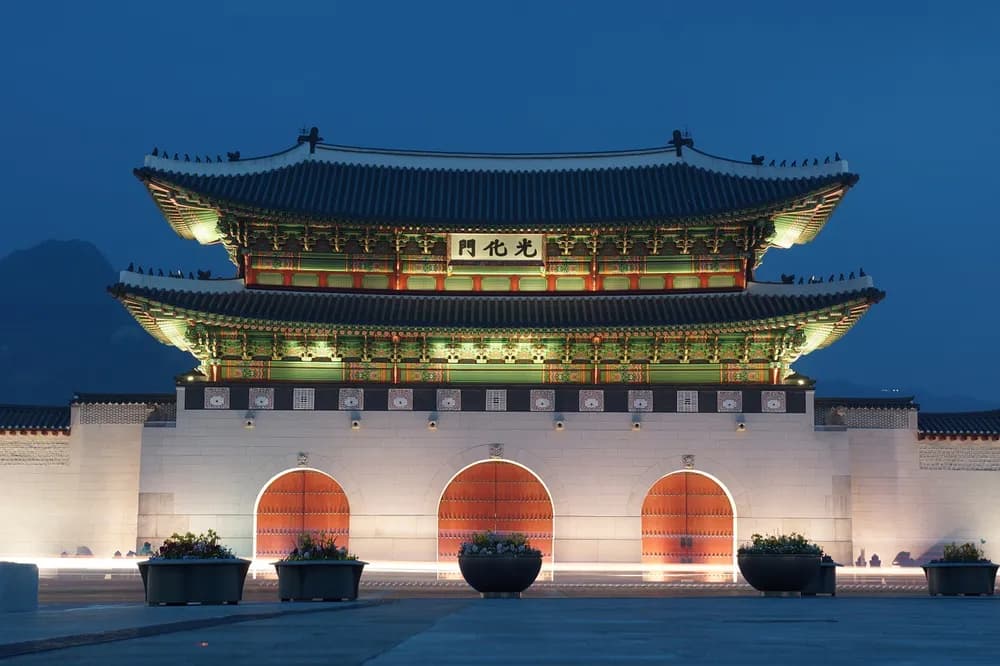
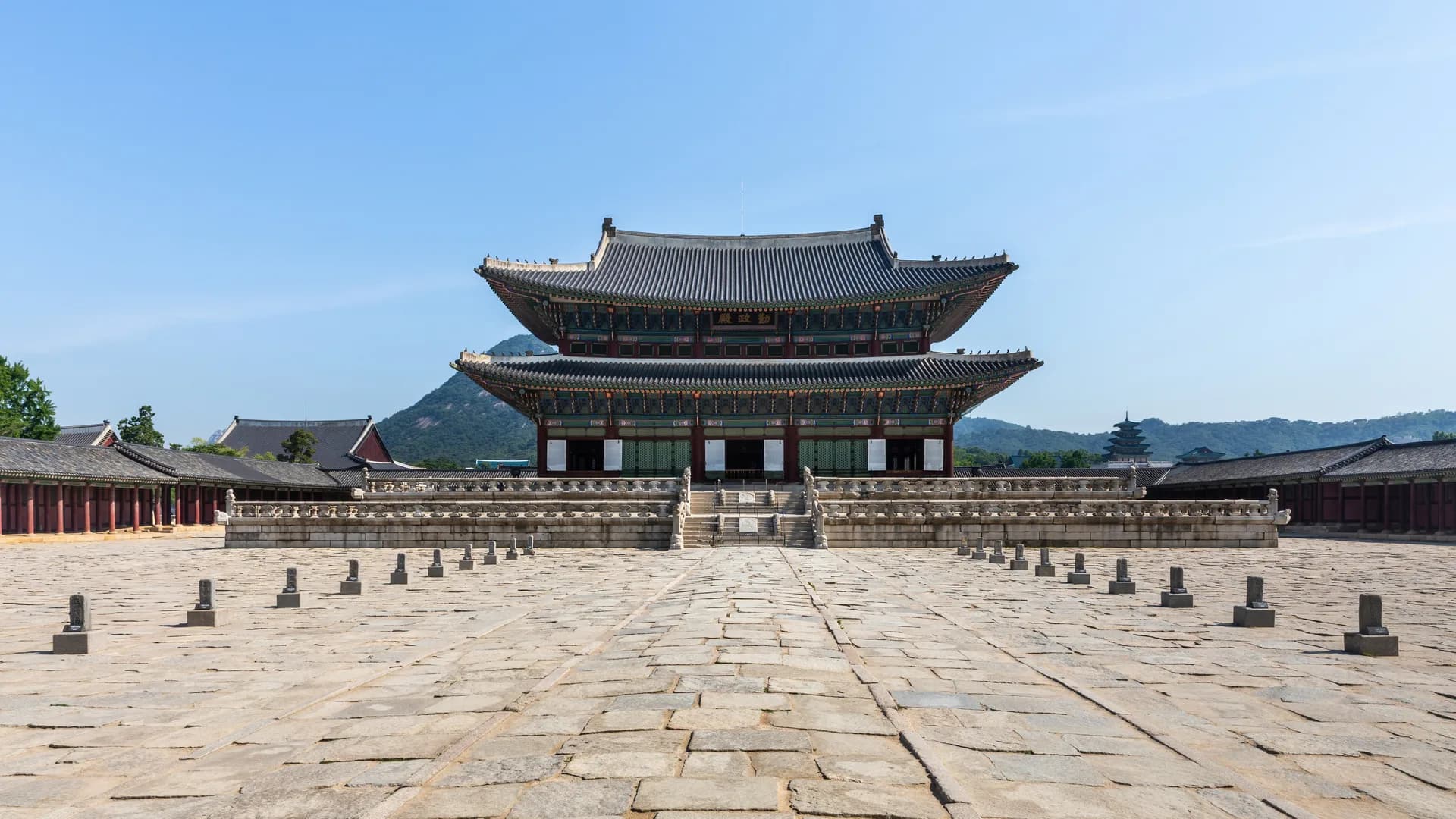
Begin at Gwanghwamun and let the route toward Geunjeongjeon do some of the explaining. Gates, courtyards and raised thresholds slow the approach, while the mountain behind the palace makes the throne hall feel like the fixed center of a larger order. Founded in 1395 as Joseon’s primary palace, Gyeongbokgung was destroyed in 1592 and remained in ruins until Gojong’s government rebuilt it in 1867. That restoration was more than architectural nostalgia: it placed the monarchy back inside the founding image of the dynasty. Continue north if time allows. Geoncheonggung brings the story abruptly into the 1890s—the assassination of Empress Myeongseong occurred there in 1895, and Gojong left Gyeongbokgung for the Russian legation in 1896. The palace that had been revived to reaffirm royal authority thus becomes the place where its vulnerability is hardest to ignore.
Read the objects beside the palace
The National Palace Museum of Korea, beside Gyeongbokgung, is the best companion to the architecture. Palace buildings show where authority was performed; royal seals, ceremonial records, screens and court objects explain the visual system behind that performance. Start with the Joseon kings and royal-life galleries before moving toward the Korean Empire gallery. The museum periodically rotates objects for conservation, so it is better to follow the gallery’s ideas than arrive expecting one particular work. Give it at least an hour, or longer if the weather makes another palace courtyard feel less appealing.
Gyeongbokgung is normally closed on Tuesdays. It opens from 09:00 to 17:00 in January–February and November–December, to 18:00 in March–May and September–October, and to 18:30 in June–August; admission ends one hour before closing. Standard adult admission is KRW 3,000. The National Palace Museum is free and normally opens 09:30–17:30 on weekdays and Sundays, with Saturday opening extended to 21:00. It closes on the last Monday of each month and on several major holidays, so a last-Monday visit may leave you with the palace but not the museum.
2. Changdeokgung: the palace where government settled in
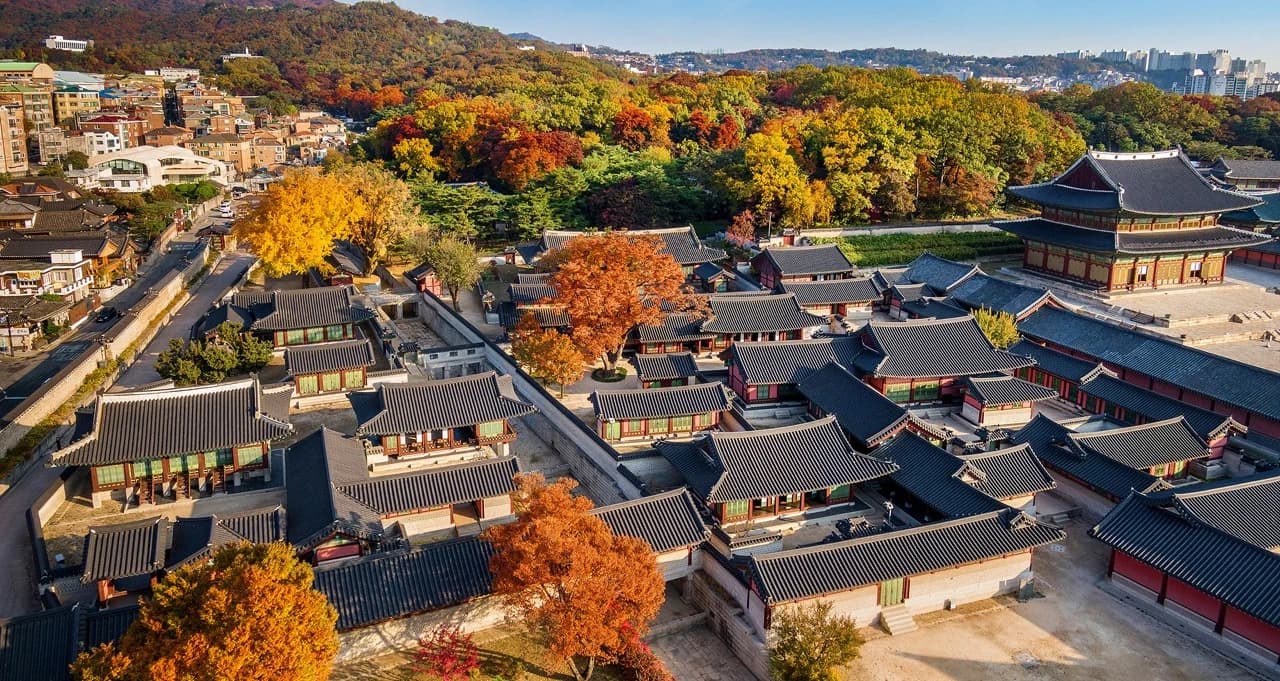
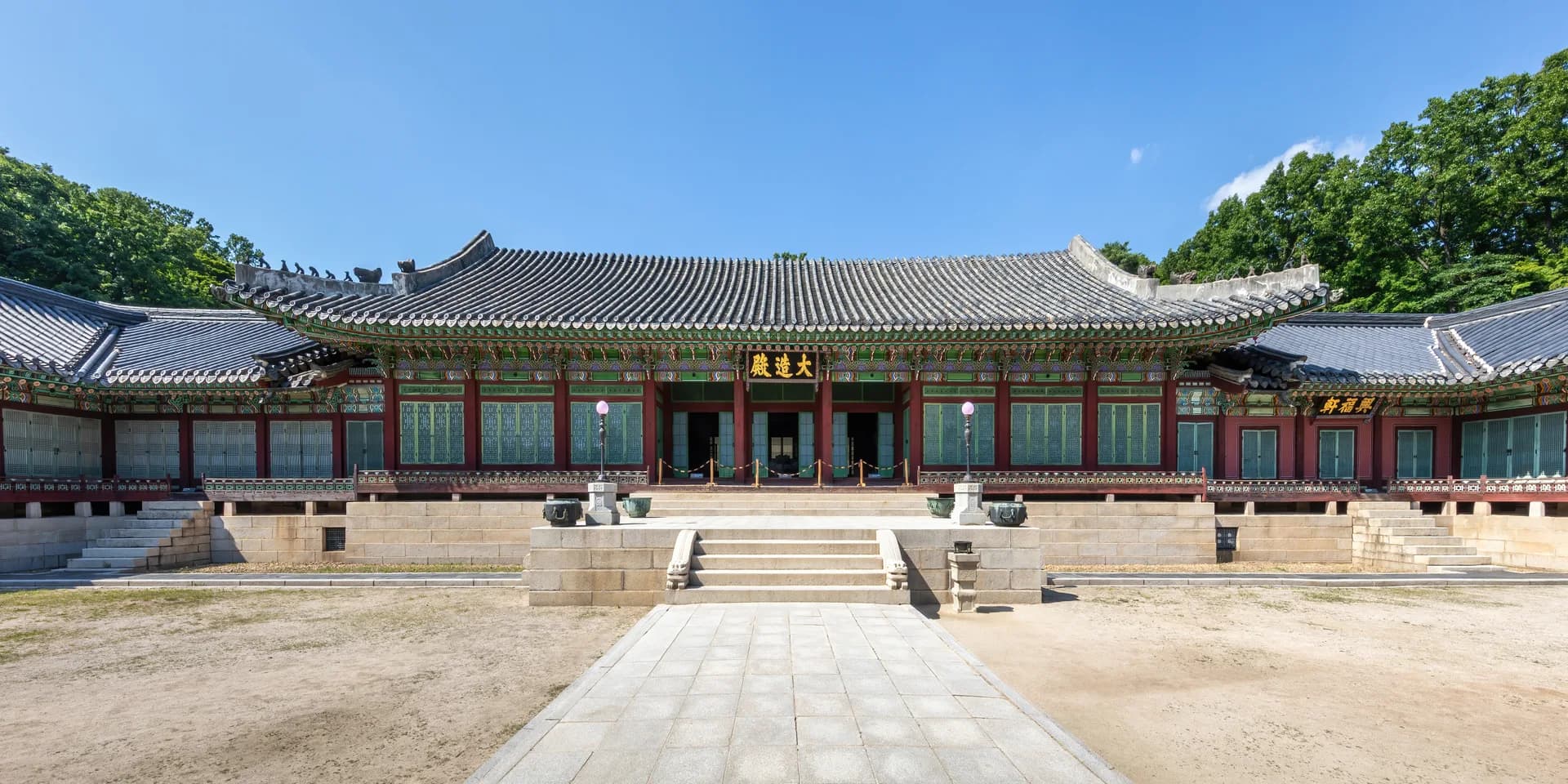
Changdeokgung was founded in 1405 as a secondary palace, but history gave it a much larger role. After the palaces were destroyed in 1592, it was rebuilt in 1610—well before Gyeongbokgung—and served as the main royal residence for roughly 270 years. Its plan feels different immediately. Instead of insisting on one dominant axis, halls and courtyards adjust to the slope and to one another. This does not make Changdeokgung less political. It makes authority feel inhabited: a court shaped by daily government, family life, scholarship and the practical limits of terrain. By the time you reach Injeongjeon and the inner residential buildings, Gyeongbokgung’s founding ideal has become a more layered, lived-in institution.
Huwon deepens that story, but it should not be treated as a casual garden add-on. The landscape includes places associated with study, libraries, royal retreat and political culture; Juhamnu Pavilion and the Gyujanggak library area, developed under King Jeongjo in the late eighteenth century, are especially useful for seeing how scholarship belonged within palace life. Visits are timed and capacity-limited. Official information currently lists 100 places per session, divided between advance and same-day tickets. Online booking opens at 10:00 six days before the visit and popular spring and autumn dates can disappear quickly. If you secure a ticket, build the day around its time. If you do not, the main palace remains fully worth visiting and carries the central argument of this route without the garden.
Changdeokgung is normally closed on Mondays. The palace buildings open 09:00–18:00 in February–May and September–October, 09:00–18:30 in June–August, and 09:00–17:30 in November–January, with last admission one hour before closing. Standard adult palace admission is KRW 3,000. Huwon costs an additional KRW 5,000 for adults and requires the palace-building ticket. For a one-day version of this route, choose the main buildings and leave Huwon for another visit; trying to fit both usually turns the rest of the day into a race.
3. Deoksugung: when the royal court becomes an imperial court
Deoksugung’s site has a longer history than its compact present-day grounds suggest. It became a temporary palace in 1593 and was formally named Gyeongungung in 1611, but its defining chapter begins in 1897. After returning from the Russian legation, Gojong used Gyeongungung as the palace of the newly proclaimed Korean Empire. The change is visible in the coexistence of architectural languages. Around Junghwajeon, royal ceremony still uses the familiar timber hall, courtyard and throne-centered order. Nearby Western-style buildings, most dramatically Seokjojeon, suggest a court also presenting itself through the vocabulary of a modern empire. This is not a clean sequence in which stone replaces wood. The revealing part is that both stand within the same palace. Gyeongungung was renamed Deoksugung after Gojong’s abdication in 1907; Seokjojeon was completed in 1910, at the very end of the empire’s brief life.
A small royal object makes the shift in title even clearer. The National Palace Museum’s Korean Empire interpretation highlights the gold seal made in 1897 when the late Queen Myeongseong was elevated posthumously to empress. Joseon seals had commonly used jade and tortoise-shaped handles; this imperial seal used gold and a dragon-shaped handle. Architecture changes slowly and unevenly, but in the seal the altered rank becomes immediate: king has become emperor, queen has become empress, and the symbols have been adjusted accordingly. It is worth remembering this object when you stand between Junghwajeon and Seokjojeon.
Deoksugung is normally closed on Mondays and opens 09:00–21:00, with last admission at 20:00. Standard adult admission is KRW 1,000. Palace entry has been free every Wednesday since August 5, 2026, although that policy does not include a separately charged art-museum ticket. The long evening hours make Deoksugung the easiest final palace stop, but arrive earlier if interiors matter to you: the grounds remain open much later than the historical interior spaces. After sunset, come for the illuminated roofs, stone façades and unusually close relationship between palace walls and the modern city rather than expecting every building to be accessible.
4. Jeong-dong: royal authority meets the street
Leave Deoksugung and continue along the stone wall into Jeong-dong. The route now changes scale. Instead of another sequence of palace gates, you encounter a public street lined with traces of diplomatic missions, schools, churches and red-brick institutions. In the late nineteenth century, this neighborhood became an international district around the imperial palace—a place where diplomacy, education, religion and the press stood unusually close to royal space. That proximity is the real final scene of the route. Authority is no longer expressed only by controlling the approach to a throne hall; it must also communicate with foreign representatives and new institutions beyond the wall. Jeongdong-gil itself is a public street and needs no ticket. Treat the surrounding schools, embassies, churches and small museums as a streetscape unless you have checked their individual opening arrangements; the historical argument is visible from the walk without collecting another set of admissions.
Choose the version that suits your trip
- For the clearest and least rushed route, use two days: Gyeongbokgung and the National Palace Museum on day one; Changdeokgung, a reserved Huwon visit, Deoksugung and Jeong-dong on day two.
- For one full day from Wednesday to Sunday, enter Gyeongbokgung at opening, keep the museum visit focused, see Changdeokgung’s main buildings without Huwon, and finish at Deoksugung and Jeong-dong in the evening.
- For one half-day, pair Gyeongbokgung with Deoksugung if you want the strongest visual contrast between the founding Joseon palace and the Korean Empire. Choose Changdeokgung with Deoksugung instead if later Joseon court life interests you more than the dynasty’s original plan.
- If Huwon is your priority, reserve it first and let that timed entry determine the day. The garden is the least flexible part of the route; Deoksugung is the most flexible.
By the end of the route, Seoul’s palaces should no longer feel interchangeable. Gyeongbokgung places authority at the end of a commanding axis. Changdeokgung lets it settle into terrain, residence and long practice. Deoksugung gathers traditional ceremony and Western monumental architecture into the same small grounds, while Jeong-dong carries the story into the city outside. Together, they make the transition from Joseon to the Korean Empire visible—not as a single dramatic break, but as a series of changes in where power stood and how it chose to be seen.
Sources & production notes
- National Palace Museum of Korea · 국립고궁박물관 · Official source
Confirms the museum’s coverage of the Joseon royal court and the Korean Empire.
Source checked · Automated check
- Royal Palaces and Tombs Center - >Cultural Heritage Administration >Explore Heritage>Deoksugung Palace>Deoksugung Palace and Its History · 국가유산청 궁능유적본부 · Official source
Confirms Deoksugung’s Korean Empire history and its traditional and Western-style architecture.
Source checked · Automated check
- Royal Palaces and Tombs Center - >Cultural Heritage Administration >Explore Heritage>Changdeokgung Palace>Changdeokgung Palace and Its History · 국가유산청 궁능유적본부 · Official source
Confirms Changdeokgung’s origins as a secondary palace, landscape setting and royal residence history.
Source checked · Automated check
- Royal Palaces and Tombs Center - >Cultural Heritage Administration >Explore Heritage>Gyeongbokgung Palace>Gyeongbokgung Palace and Its History · 국가유산청 궁능유적본부 · Official source
Confirms Gyeongbokgung’s foundation, wartime destruction and restoration history.
Source checked · Automated check
Produced by ListenTrip
AI was used in creating this content.