Gyeongbokgung, Changdeokgung, or Deoksugung: Which Palace Should You Visit?
 ListenTrip 제작 이미지
If you can visit only one palace on your first trip to Seoul, start with Gyeongbokgung for the main royal palace experience. Choose Changdeokgung if architecture and landscape interest you most, or Deoksugung if you have less time or want to explore the Korean Empire alongside modern Seoul. You do not need to fit all three into one day. The comparison below explains what each choice gives you—and when a different palace may suit you better.
| Palace | The history it represents | Spatial character | Best for | Suggested time |
|---|---|---|---|---|
| Gyeongbokgung | The founding vision and main palace of Joseon | Grand, formal, axial, with Bugaksan Mountain behind it | A first palace visit and the classic main-palace experience | 2–3 hours |
| Changdeokgung | The palace where kings actually lived and governed for much of the dynasty | Layered courtyards, slopes, trees, and architecture shaped around the terrain | Architecture, gardens, and slower observation | 1.5–2 hours for the buildings; 2.5–3 hours with the Secret Garden |
| Deoksugung | The Korean Empire and Seoul’s transition toward modernity | Compact grounds mixing traditional and Western-style buildings | Modern history, evening visits, and shorter itineraries | 1–1.5 hours; longer with reserved interiors or nearby Jeong-dong |
Gyeongbokgung: for the full main-palace experience
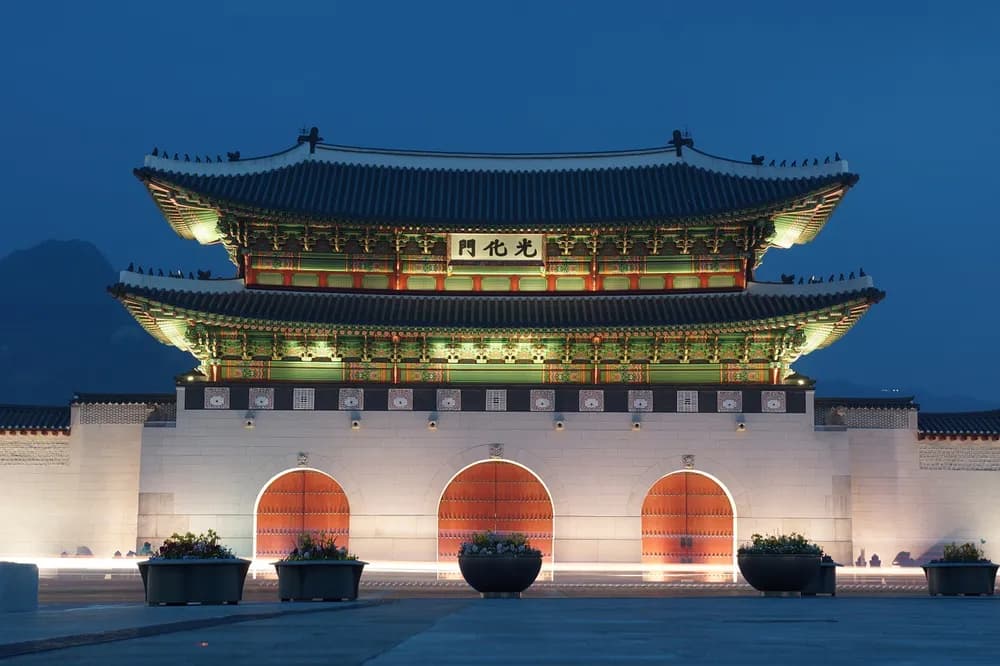
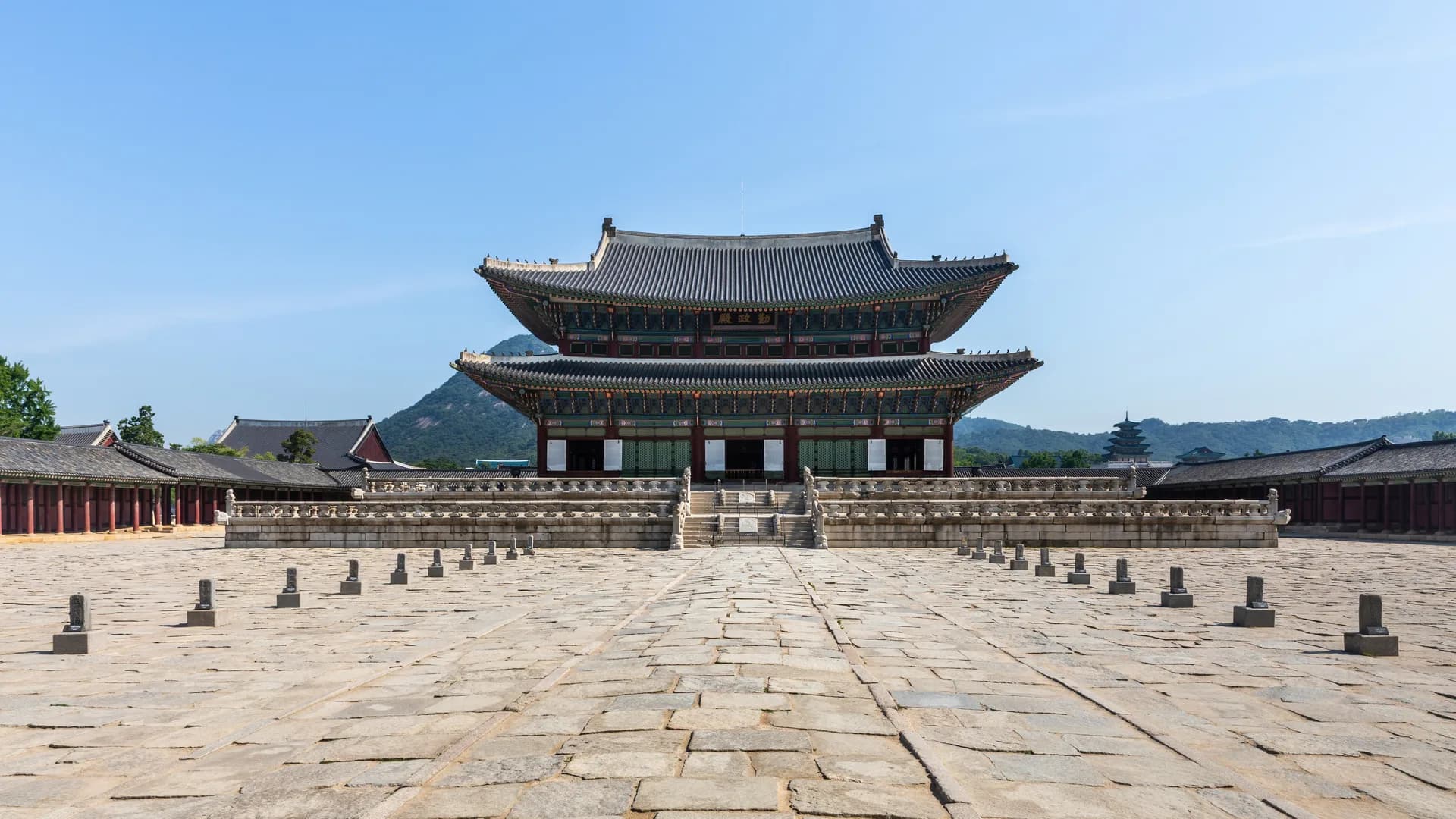
Built in 1395 as the primary palace of the newly founded Joseon dynasty, Gyeongbokgung was designed to make royal order visible. Passing through Gwanghwamun, you move through gates and large courtyards toward Geunjeongjeon, the throne hall, while Bugaksan rises behind the tiled roofs. The scale is part of the meaning: this was the dynasty presenting an ideal image of itself. Much of the palace was destroyed, rebuilt, dismantled during the colonial period, and later restored, so its strength lies less in an untouched sense of age than in the clarity of its ceremonial plan. If this is your first trip to Seoul and you want one palace that immediately explains what a Joseon main palace was meant to be, choose Gyeongbokgung.
Gyeongbokgung opens at 09:00 and is normally closed on Tuesdays. It closes at 17:00 from January to February and November to December, at 18:00 from March to May and September to October, and at 18:30 from June to August. Final admission is one hour before closing. The grounds are extensive, so arriving shortly before last entry is likely to leave you with scale but little atmosphere; allow at least two hours, and closer to three if you enjoy lingering around the ponds and residential quarters.
Changdeokgung: for architecture that moves with the landscape
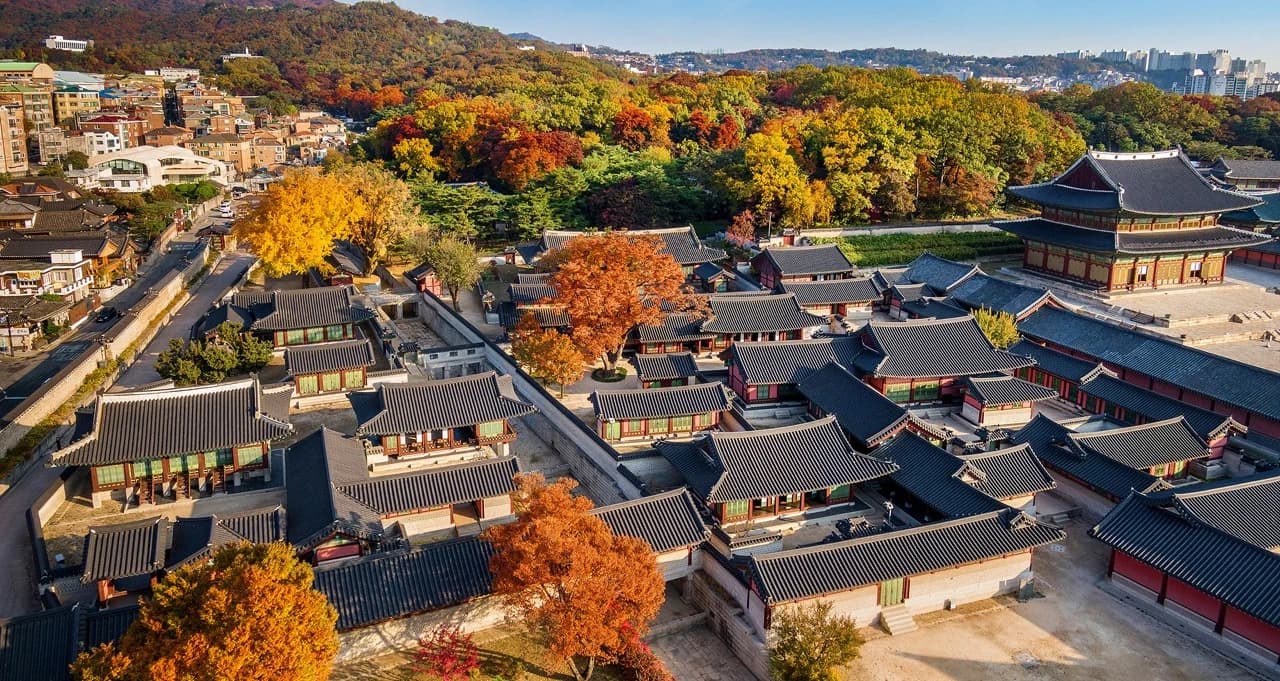
Changdeokgung began in 1405 as a secondary palace, but after the palaces were burned during the Japanese invasions of the late 16th century, it was rebuilt first and became the dynasty’s principal royal residence for roughly 270 years. That long period of use gives it a different emotional register from Gyeongbokgung. Instead of marching along one monumental axis, you turn through courtyards, encounter roofs at shifting heights, and feel buildings negotiating with slopes and existing trees. UNESCO recognizes the palace for this integration of architecture, garden, and natural terrain. Choose Changdeokgung if you tend to notice how a building meets the ground, how a courtyard opens gradually, or how a view is framed rather than announced.
The Secret Garden, or Huwon, deepens that experience with wooded paths, ponds, pavilions, and changes in elevation—but it is not the whole palace. The main building area deserves unhurried attention of its own. Garden entry is capacity-limited and tied to set times, with places divided between online booking and same-day sales. If the garden is central to your choice, reserve it rather than building a tight itinerary around the hope of a walk-up place. Changdeokgung is normally closed on Mondays. The palace opens at 09:00 and closes at 18:00 from February to May and September to October, at 18:30 from June to August, and at 17:30 from November to January; final admission is one hour before closing.
There is one temporary detail worth checking before you go. Donhwamun, the main gate, has been undergoing restoration scheduled through 2026. During the work, the official entrance route uses Geumhomun on the palace’s western side, with a separate temporary exit nearby. The palace itself remains the reason to come, but map directions and older photographs may lead you toward a gate that is not currently functioning as the visitor entrance.
Deoksugung: for the Korean Empire and the city beyond the walls
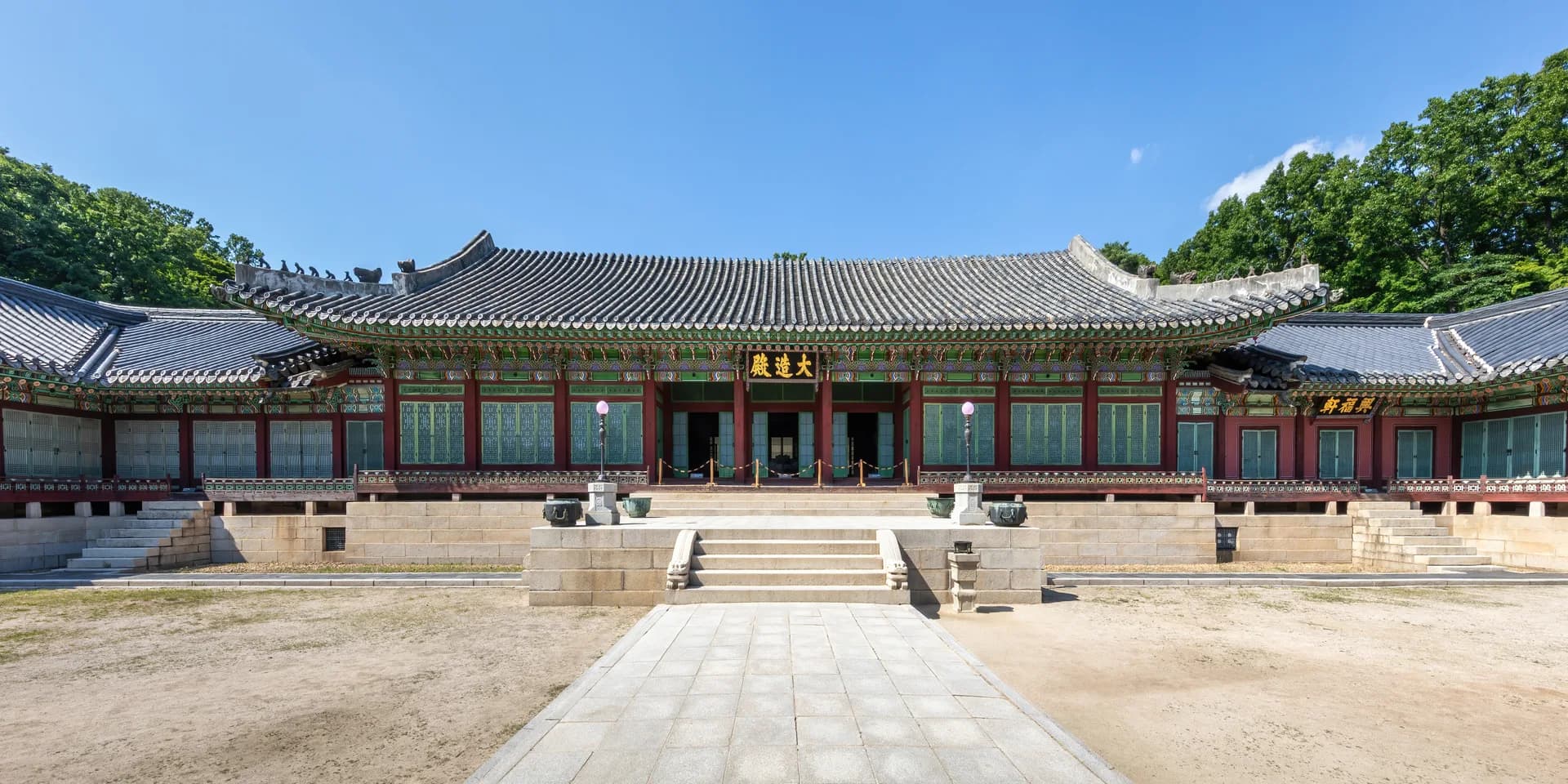
Deoksugung is smaller, but it should not be treated as a reduced version of the other two. Originally used as a temporary palace after the destruction of 1592, it became the imperial palace when Gojong proclaimed the Korean Empire in 1897. Traditional halls stand beside Western-style buildings such as Seokjojeon, reflecting an era when the court was attempting to define a modern empire while facing intense foreign pressure. Outside are City Hall, office towers, traffic, and the historic streets of Jeong-dong. That closeness is precisely the point: Deoksugung is where palace history and modern Seoul seem to occupy the same moment.
Deoksugung is normally closed on Mondays, but its grounds stay open from 09:00 until 21:00 throughout the year, with final admission at 20:00. This makes it the easiest palace to place after another day of sightseeing, especially around sunset. Not every interior follows the late palace hours: Seokjojeon has limited guided access requiring advance online reservation, while Dondeokjeon and Jungmyeongjeon close earlier. Come at night for illuminated architecture and the unusual contrast with central Seoul; come earlier if entering the imperial-era buildings matters more than atmosphere.
If you have time for two palaces
- For the clearest historical contrast, visit Gyeongbokgung during the day and Deoksugung toward evening. You move from the confident founding vision of Joseon to the more complicated final decades of the monarchy, without repeating the same spatial experience twice.
- For architecture and landscape, make Changdeokgung your main visit—ideally with a reserved Secret Garden time—then add Deoksugung after dusk. This pairing gives you a wooded royal landscape followed by the palace most deeply entangled with modern Seoul.
- Choose Gyeongbokgung and Changdeokgung together only if palaces are a major interest. They are the two richest Joseon experiences, but seeing both properly makes for a long, walking-heavy day. Avoid compressing them into quick photo stops simply because they are both famous.
The simplest choice
If this is your first visit and you want the palace that feels most like Seoul’s historical centerpiece, go to Gyeongbokgung. If your attention naturally drifts from the throne hall toward rooflines, gardens, trees, and the shape of the land, choose Changdeokgung. If your schedule is short—or you are more curious about the Korean Empire and the moment old Seoul met the modern world—choose Deoksugung, preferably in the late afternoon. Weekly closing days may shift when they coincide with Korean public or substitute holidays, so travelers visiting around a holiday period should check the official palace notice before setting out.
Writing, editing and publication: ListenTrip. This article was prepared with AI assistance.
Sources & production notes
- Royal Palaces and Tombs Center - >Cultural Heritage Administration >Explore Heritage>Gyeongbokgung Palace>Gyeongbokgung Palace and Its History · 국가유산청 궁능유적본부 · Official source
Confirms Gyeongbokgung’s foundation, wartime destruction and restoration history.
Source checked · Automated check
- Royal Palaces and Tombs Center - >Cultural Heritage Administration >Explore Heritage>Changdeokgung Palace>Changdeokgung Palace and Its History · 국가유산청 궁능유적본부 · Official source
Confirms Changdeokgung’s origins as a secondary palace, landscape setting and royal residence history.
Source checked · Automated check
- 궁능유적본부 - 소통마당>보도자료>전체>목록 · 국가유산청 궁능유적본부 · Official source
Confirms the announced temporary Geumhomun entrance during Donhwamun repairs.
Source checked · Automated check
- Royal Palaces and Tombs Center - >Cultural Heritage Administration >Explore Heritage>Deoksugung Palace>Deoksugung Palace and Its History · 국가유산청 궁능유적본부 · Official source
Confirms Deoksugung’s Korean Empire history and its traditional and Western-style architecture.
Source checked · Automated check
Produced by ListenTrip
AI was used for research.